
The question in itself is sure to raise a few eyebrows: Which German state is the most hospitable?
If we were to put the question to our readers in a survey, or worse, in a social media post, you might be able to imagine the level of snarkyness, or even disdain, that would come through in some of the replies: 'German hospitality -- is there such a thing!?'
And it's not without reason; Germans are known for their bluntness (see also, rudeness), the country is pretty consistently rated poorly as a place to move to as a foreigner, and even in the country's more internationally-oriented cities visitors are likely to encounter a bit of unfriendliness in Munich or the classic Berliner Schnauze in the capital.
In fairness, anyone who lives or travels in Germany can also expect to find a good bit of hospitality from time to time, and sometimes in the most unexpected places.
READ ALSO: Munich cafe goes viral for defending staff for not speaking German
From the fool-hardy drinkers at Oktoberfest who might just invite you to join their table, hand you a glass and spend a good bit of time explaining exactly why it's the best in the world; to the ticket checkers on the trains and buses that might just offer a bit of Kulanz to visitors with the wrong ticket; to most people on the street who might look grumpy at first, but will light up and gladly give you directions or explain something if you ask -- if you travel far and wide around the Bundesrepublik you're sure to meet plenty of kind, friendly and downright hospitable Germans all around.
But is there a standout region, or state? Bild daily newspaper is asking the question this week to determine the country's 'most hospitable' state.
For what its worth a similar survey, which was based on 370 million verified guest reviews left on Booking.com found that the German state of Saxony was one of 'the most hospitable regions in the world'. It came alongside; Hidalgo, Mexico; Idaho, United States; Navarra, Spain; and Overijssel in the Netherlands, among others.
Within Germany, the next most most hospitable regions were found to be Bavaria, Rhineland-Palatinate, Baden-Württemberg and Thuringia.
Interestingly that survey also ranked Germany as the fourth 'most hospitable' country in the world, after Italy, France and Spain and ahead of Great Britain.
(If you have thoughts on where in Germany is more or less hospitable, do feel free to let us know in a comment below.)
Have German holiday habits been unfairly maligned?
In more news from the world of surveys, new data appears to suggest the German reputation for reserving poolside sunlounges at dawn by placing towels on them may be misplaced.
Apparently, only 38 percent of German holidaymakers admitted to having reserved a sunlounge with a towel, compared with 45 percent of both Italians and French respondents.
The research, conducted by YouGov, also found that it's only Brits -- and Germans themselves -- who really associate the practice with Germany. Elsewhere in Europe, relatively few respondents shared the same view.
READ ALSO: German tourist wins damages after sun lounger court battle
Photo of the week:

In niche, but fun sports to watch: Anyone in Düsseldorf this weekend might like to think about watching the finals of the IFAF Flag Football World Championships at the Flag Football Complex in Düsseldorf-Garath, around a 10-minute walk from Düsseldorf-Garath S-Bahn station.
Sunday alone is set to feature all four medal matches. Final-day tickets cost €15 for adults, €10 for concession holders and €5 for children aged six-11, while children under six are admitted free. Tickets have to be booked online in advance.
'And I'm not Lindner'
One group of people who certainly wouldn’t dream of unfairly bagging a sunlounge at the moment are Berlin’s politicians, all frantically competing for the favour of voters ahead of next month’s state election.
The Local caught up this week with one of the candidates hoping to win a seat in Berlin’s House of Representatives. Matt Bristow, originally from Britain but now a naturalised German citizen, is standing for Volt. He outlined the party's plans to "unf*ck Berlin” with practical solutions rather than ideological battles.
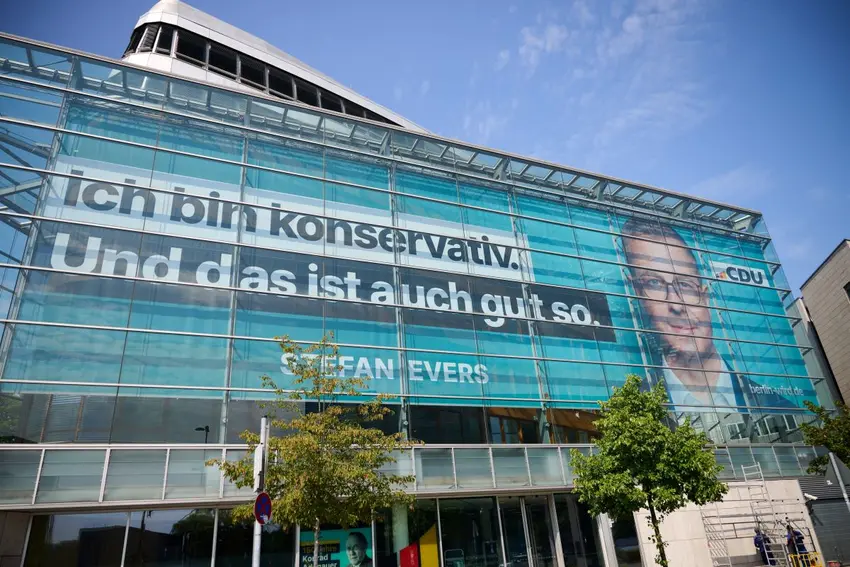
Meanwhile, other politicians seem more interested in communicating with each other than with voters. For example, one slogan used by CDU lead candidate Jan-Marcel Evers -- "I am conservative. And that’s a good thing" -- only really makes sense if you happen to remember what former SPD mayor Klaus Wowereit said in 2001: “I’m gay. And that’s a good thing.”
SPD lead candidate Steffen Krach subsequently responded on social media with a photo of him and Wowereit and the message: "Berlin isn’t conservative. And that’s a good thing."
But perhaps the strangest slogan so far belongs to FDP candidate Gabriele Cocozza, whose campaign posters read: “And I’m not Lindner”.
Lindner, in this instance, is Christian Lindner, former leader of the FDP.
When Der Spiegel asked Cocozza to explain exactly how voters should interpret this message, she replied, intriguingly: "The fact that I’m not Christian Lindner is simply a fact".
READ ALSO: 'No promises' - Decoding the political slogans plastered all over Berlin
With reporting by Tom Pugh.
Comments